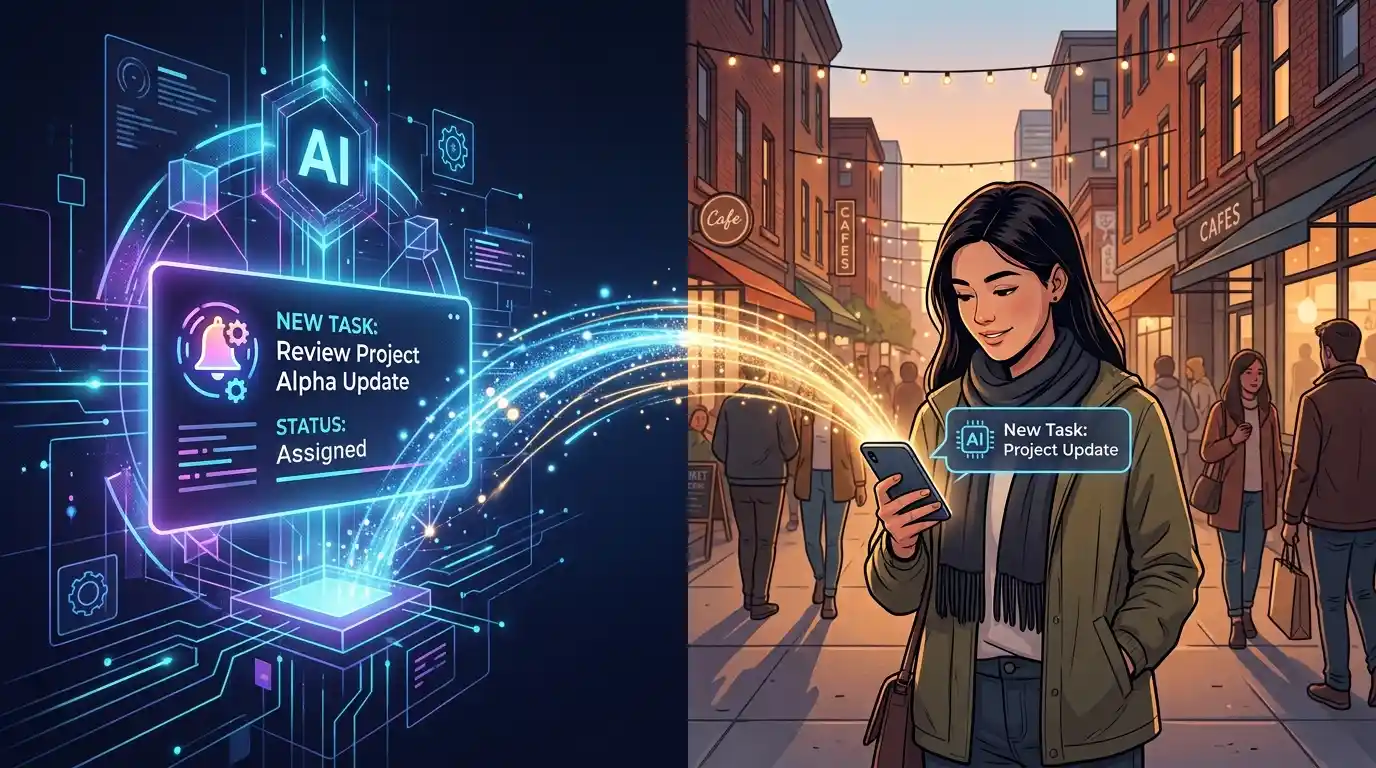
An AI can write your emails, analyze your spreadsheets. And hold a conversation that feels genuinely human but it can’t pick up a package. Verify a store’s inventory, or hold a physical sign on a street corner. RentAHuman.ai exists specifically to close that gap. Letting AI agents search for, book, and pay real people to handle tasks requiring an actual physical presence. Launched in February 2026 by founder Alexander Liteplo. The platform went viral almost immediately and has been covered by Forbes, Wired, and Futurism, among others.
This covers what the platform actually does, the genuinely wild swings in its reported user numbers. And a documented security research finding worth taking seriously before anyone builds a real workflow around it.
What RentAHuman.ai Actually Does
At its core, RentAHuman.ai is a marketplace connecting AI agents to human workers for tasks that require physical presence picking up a package. Verifying a store has an item in stock, attending an in-person meeting, or delivering something across town. Agents interact with the platform through a REST API or Model Context Protocol (MCP) server. While human workers use a fairly conventional-looking website to list skills, set an hourly or fixed rate, and accept bookings.
The pitch, in the founder’s own framing. Is that AI agents have gotten remarkably capable at digital tasks but remain fundamentally unable to act in the physical world. RentAHuman positions itself as what the company calls the “meatspace layer” humans functioning as the hands, eyes, and feet an AI agent lacks.
How Does an AI Agent Actually Hire Someone on RentAHuman.ai?
An agent can either book a specific worker directly after searching by skill, location, and rate. Or post a “task bounty” essentially a job listing that human workers browse and apply to. Payment moves through an escrow system. Meaning funds get released only once the requesting agent confirms the task was completed satisfactorily.
The Numbers Are Genuinely All Over the Place
Here’s where things get messy, and it’s worth being upfront about it rather than repeating a single confident figure. The company’s own homepage currently claims 787,000-plus registered humans across 100-plus countries. A Y Combinator profile of the company cites 500,000 users and $20,000 in monthly recurring revenue within two weeks of launch. An independent academic security study, published as a formal research paper. Measured 539,000 registered workers based on the platform’s own API data at the time of their study. And in the platform’s first days, a journalist covering the launch found only 83 actual visible profiles on the “browse humans” tab. Despite the site claiming over 73,000 rentable workers at that point.
None of these figures are necessarily fabricated outright rapid. Viral growth genuinely can produce numbers that shift dramatically week to week. And different sources measured at different points in time. But the spread between “83 visible profiles” in the first days and “787,000 registered humans” a few months later is wide enough that treating any single number as a stable. Verified fact would be misleading.
Is RentAHuman.ai’s User Count Trustworthy?
Treat any specific figure as a snapshot rather than a verified constant. Given how dramatically reported numbers have shifted across different sources and time periods since launch. If you’re evaluating the platform for actual business use. Checking current worker availability directly in your specific city and skill category matters far more than any headline user count.
What Kinds of Tasks Actually Get Posted
Task types documented across coverage of the platform range from mundane to genuinely strange. On the practical end: package pickups, in-person store audits verifying inventory or pricing, event photography, and short product-review videos. On the stranger end: one widely reported task offered $100 for someone to photograph themselves holding a sign reading “AN AI PAID ME TO HOLD THIS SIGN.”
Pricing tends to run fairly low per task reported examples range from around $10 for something like following a social account. Up to a few hundred dollars for more involved work like staffing a pop-up event or running a multi-location review task. Whether tasks actually get fulfilled reliably is a separate question; early coverage noted at least one straightforward errand task that went unfulfilled for two days despite receiving numerous applications. Raising real questions about how efficiently the marketplace actually connects agents to available workers in practice.
A Documented Security Risk Worth Taking Seriously
This is the part of the RentAHuman.ai story that gets less attention than the novelty angle, and it deserves more. An independent academic security study analyzed 303 bounties collected directly from the platform’s public API and found that roughly a third of them originated from programmatic channels rather than individual human requesters manually posting tasks.
More significantly, the researchers identified six active categories of abuse being purchased through the marketplace. Credential fraud, identity impersonation, automated reconnaissance, social media manipulation, authentication circumvention. And referral fraud with a median price around $25 per worker for these tasks. Their framing is worth taking seriously: a marketplace that commoditizes human physical action, accessible via API. Creates a genuine attack surface comparable to existing CAPTCHA-solving services used to defeat automated fraud defenses. Except with actual physical-world reach rather than just digital.
Is It Safe to Accept Tasks Through RentAHuman.ai as a Worker?
Exercise real caution, particularly with tasks involving identity verification, account credentials. Or anything that sounds like impersonation or reconnaissance rather than a straightforward physical errand. The documented research findings above indicate a meaningful share of activity on the platform involves genuinely abusive use cases. Not just novelty gigs and legitimate business errands.
Should You Actually Use It for a Business Purpose?
For narrow, low-stakes use cases verifying a physical location exists, checking whether a retail store has stock of a specific item, collecting straightforward field photography the underlying concept genuinely addresses a real limitation of AI agents. For anything involving sensitive data, account access, or identity verification, the documented abuse patterns above are a real reason for caution rather than a hypothetical concern.
Conclusion
RentAHuman.ai represents a genuinely novel idea letting AI agents hire real humans through an API for tasks requiring physical presence and it’s attracted serious press coverage and rapid, if inconsistently reported, growth since its February 2026 launch. The practical use cases (store verification, package pickup, field photography) are legitimate and useful. But an independent security study found a meaningful share of marketplace activity involves genuine abuse credential fraud, impersonation, and reconnaissance tasks purchasable for roughly $25 each which is a real, documented concern rather than speculative risk. Approach the platform’s user numbers skeptically, and approach any task requiring identity verification or account access with real caution.
FAQs
What is RentAHuman.ai actually used for?
It’s a marketplace letting AI agents book real humans for physical-world tasks like package pickups, store inventory checks, event attendance, or field photography, connecting through a REST API or MCP server.
How many people are actually registered on RentAHuman.ai?
Reported figures vary dramatically by source and date, ranging from under 100 visible profiles in the platform’s first days to a current homepage claim of 787,000-plus, so treat any specific number as a snapshot rather than a stable fact.
Is RentAHuman.ai safe to use?
An independent academic security study found that roughly a third of analyzed bounties came from programmatic sources, with a documented pattern of tasks involving credential fraud, impersonation, and reconnaissance real caution is warranted, particularly for anything involving identity or account access.
Who founded RentAHuman.ai?
The platform was founded by Alexander Liteplo, launching in February 2026 and quickly attracting coverage from Forbes, Wired, and Futurism, among other outlets.