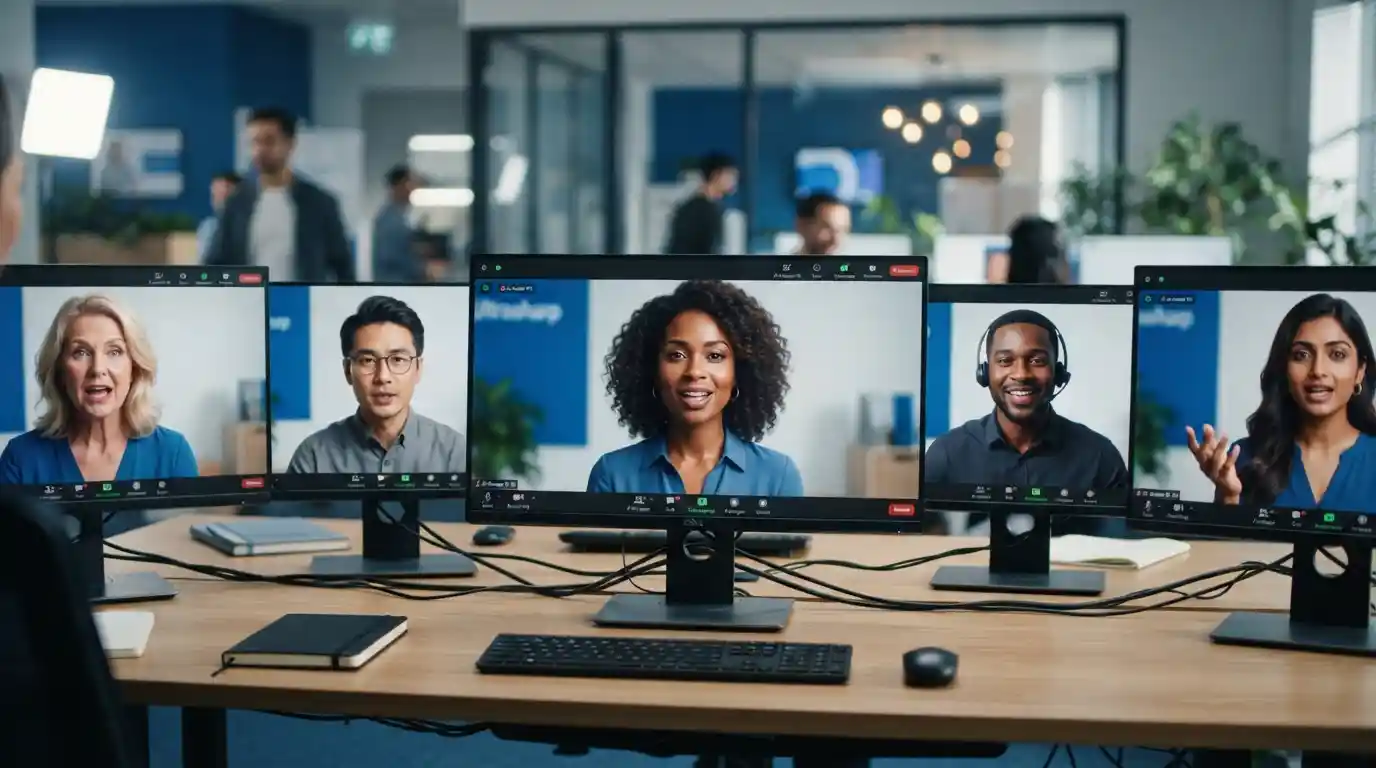
I spent a weekend last year testing five different AI human generators back to back. Same script, same length, uploaded to each one. The results ranged from genuinely convincing to something that looked like a wax figure trying to sell me insurance. That gap matters. AI humans aren’t some future thing anymore. Companies use them right now for training videos, customer service, marketing content. Stuff that used to need an actual film crew. This guide walks through what these tools actually do well. Where they still fall apart. Which platforms are worth your time in 2026. No hype, just what I’ve seen work and what hasn’t.
What Are AI Humans, Exactly?
AI humans are computer-generated people. Built from real footage, 3D models, or pure generative synthesis. Designed to talk, move, and express emotion like an actual person on camera. Some are pre-built avatars you pick from a library. Others get trained on your own face and voice, so the avatar looks and sounds like you specifically.
The tech behind this stack got good fast. Text-to-speech used to sound robotic. Now it sounds genuinely natural, mostly because of neural TTS models handling pacing and emphasis way better than older systems ever did. Lip-sync improved just as much. I remember testing an early avatar tool back in 2021 where the mouth movements never quite matched the audio. That problem’s mostly solved now on the better platforms.
What’s the difference between an AI human and a deepfake?
An AI human is a synthetic person built for legitimate use. Usually with consent, usually labeled clearly as AI-generated. A deepfake typically means unauthorized footage instead, someone’s real face and voice mapped onto content they never agreed to. The tech underneath overlaps a lot. Consent is what actually separates the two.
Where Are AI Humans Actually Used Right Now?
Businesses aren’t using this stuff for novelty anymore. I’ve seen it show up in customer service, onboarding, marketing, all doing jobs that used to mean booking a studio and an actual presenter. The appeal is obvious once you’ve done it the old way. No reshoots because someone had a cold. No coordinating five people’s calendars for a two-minute training video.
Customer service is probably the biggest use case right now. An AI avatar can handle basic support questions on a website at 3am, no overtime pay involved. Training and onboarding videos are close behind. A company updates its safety procedures. They don’t fly a presenter back in every time the policy changes. They just update the script and regenerate the video.
Can AI avatars replace human presenters entirely?
Not yet. Not for anything requiring real judgment or improvisation. AI avatars work great for scripted, repeatable content like training modules or FAQ videos. They still struggle with anything needing genuine spontaneity, answering an unexpected question live, reading a room during an actual conversation.
7 AI Human Platforms Worth Testing
I’ve tried most of the major ones at this point. They’re not interchangeable, and I learned that the annoying way, by picking the cheapest one first and regretting it. Each platform leans toward a different use case. Picking based on price alone usually backfires.
Synthesia handles corporate training and internal comms well. Big library of pre-built presenters. Support for dozens of languages. Probably the most polished option for straightforward talking-head video.
HeyGen leans harder into custom avatars, letting you train one on your own face relatively quickly. I found the lip-sync noticeably better than a couple of competitors I tested that same week.
D-ID works well for quick, lightweight avatar clips. Good for social content where you don’t need a five-minute training video.
Colossyan targets learning and development specifically, with quiz and interaction features baked right into the video itself.
Elai.io is a decent budget option if you’re generating a high volume of shorter videos and don’t need premium avatar realism.
Soul Machines and UneeQ go further into real-time, interactive digital humans, the kind that hold a live conversation instead of just reading a script. Different category entirely. Closer to an embodied AI assistant than a video generator.
Which AI human platform is best for beginners?
Synthesia and D-ID both have the gentlest learning curve for someone new to this tech. Type a script, pick an avatar, generate a video in under ten minutes. No settings you don’t understand getting in the way.
How Much Do AI Human Tools Cost?
Pricing splits into a few models. Worth knowing which one you’re actually paying for before you commit to anything. Some platforms run monthly, a set number of video minutes included. Others use a credits system instead, pay per generation regardless of how often you log in.
Free tiers exist on most platforms. They usually come with a visible watermark and limited output length. Fine for testing. Not for anything you’d actually publish. Paid plans for solo creators or small teams tend to start around what you’d pay for a basic streaming subscription each month, then climb steeply once you add enterprise features, custom avatar training, API access, commercial licensing. Need commercial rights for marketing content? Check that explicitly first. Don’t build a whole campaign around a free-tier video. A lot of platforms restrict commercial use to paid plans specifically, and I’ve seen someone get burned finding that out after the fact.
Is it worth paying for a premium AI human avatar?
Yes, if you’re publishing publicly or using it commercially. Watermarks and lower resolution genuinely hurt credibility. For internal training videos nobody outside your company sees, a cheaper tier is usually fine. Nobody’s complaining about a small logo in the corner of an internal safety video.
The Real Limitations Nobody Mentions
Every AI human tool still struggles with the same handful of things. Hands are still rough in a lot of generative avatar tools. Less of an issue for talking-head video specifically, but it shows up fast the moment gesture gets involved. Emotional range is still limited too. Most avatars nail a handful of expressions, happy, neutral, concerned. Subtle emotional shifts within a single sentence still tend to look a bit flat, like someone reading news copy they don’t actually care about.
Accents and less common languages remain uneven across platforms. Some handle Spanish or Mandarin about as well as English. Others come out noticeably more robotic. Test with your actual script and language before committing to a platform for a big project. A demo reel in English tells you almost nothing about how it’ll handle your actual content.
Conclusion
AI humans have gone from novelty to genuinely useful business tool in a short window of time. They’re solid for scripted, repeatable content, training, basic customer service. Still weak at anything needing real spontaneity or subtle emotion. Test a platform with your actual script before committing to a plan. Demo reels rarely reflect how a tool handles your specific content. Pick based on your use case first, not price. You’ll avoid most of the disappointment people run into with this tech.
FAQs
Are AI human videos legal to use commercially?
Yes, as long as you’re using a licensed platform and your plan explicitly includes commercial use rights. Always check the specific license tier. Many platforms restrict commercial use to paid plans and require disclosure that the video is AI-generated in certain contexts.
Can you tell if a video uses an AI human instead of a real person?
Often yes, especially in longer clips where subtle emotional range or hand movement becomes noticeable. Shorter, well-produced clips from top-tier platforms can be genuinely hard to distinguish at a glance. Close attention to eye movement and mouth timing usually gives it away eventually.
Do I need any technical skill to create an AI human video?
No, most platforms are built for non-technical users. Just type a script and pick an avatar. Custom avatar training, where the AI learns your specific face and voice, takes a bit more setup but still doesn’t require any coding.
How realistic are AI humans compared to real video?
The best platforms get remarkably close for standard talking-head content, especially with good lighting reference and a clean script. They still fall short on hands, subtle emotional nuance, and truly spontaneous conversation. A real person on camera still wins clearly there.